Uncovercity
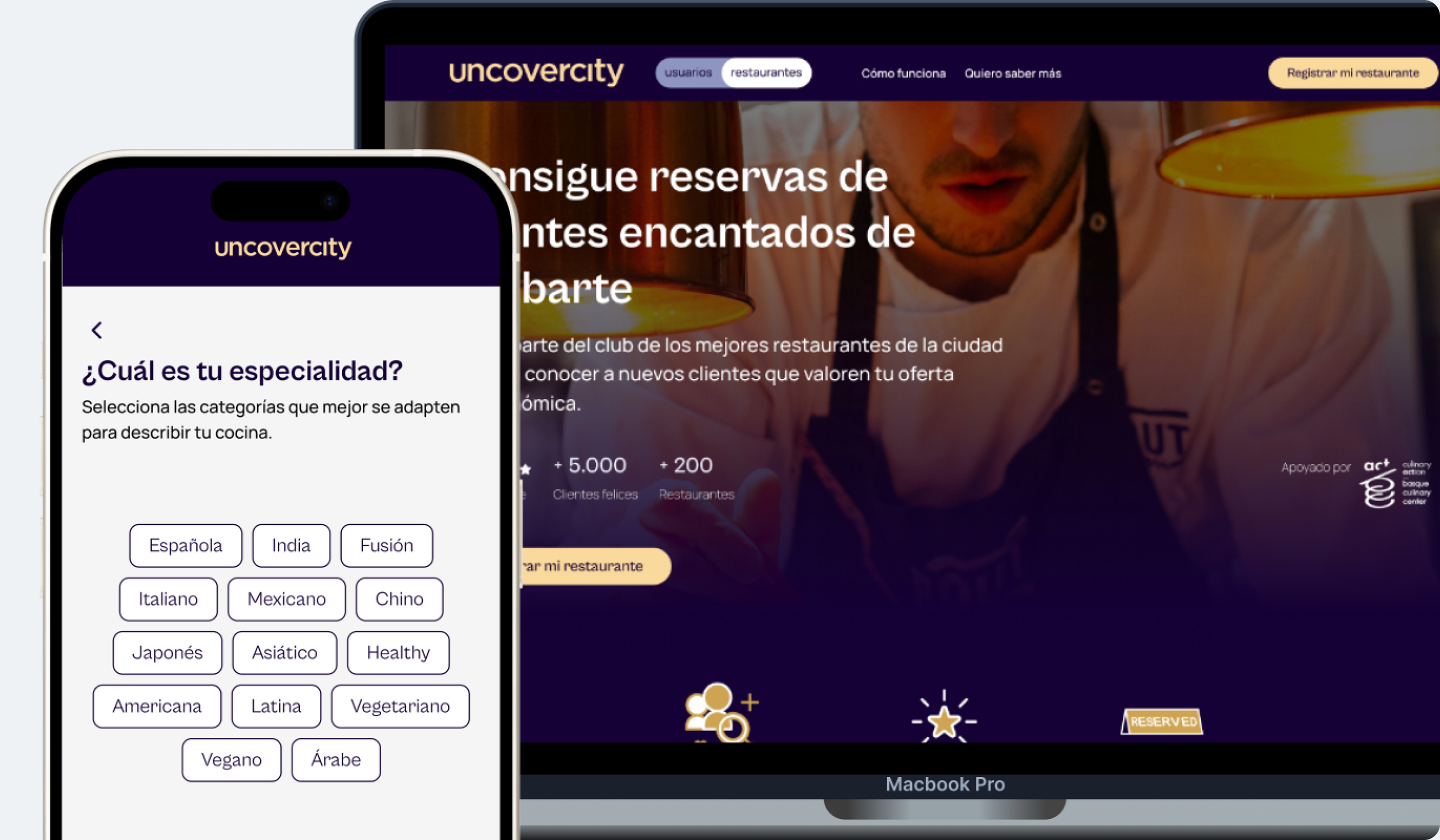
Uncovercity is a dining experience platform that curates secret culinary adventures based on your tastes.
Founded on the idea that dining should be an adventure, Uncovercity partners with top restaurants to create unforgettable experiences. Diners enjoy unique, tailored meals, while restaurants showcase their creativity and attract new guests. It’s a win-win that turns every meal into a memorable journey.
View prototypes
Restaurants are one of the most important partners for Uncovercity to provide its service. Although the interaction with restaurants was close, finding new places was slow, reactive, and manual. As a consequence, project scalability was limited. A more proactive way to find new restaurants was needed.
When I joined, Uncovercity had a database of restaurants and related information, but it was collected manually. There were numerous changes in the data collection process, making it difficult to transform the data into usable information as it wasn’t organized. We needed a scalable system to identify new restaurants and determine specific data points to find the best restaurants in town.
Uncovercity’s main goal is to find the perfect restaurant and menu for its clients. Given the low volume, restaurants were selected manually by an operator, resulting in biased—but effective—selections. As we were designing a system to handle a high volume of restaurant data, we took into account the necessary information to find restaurants that aligned with our clients’ preferences.
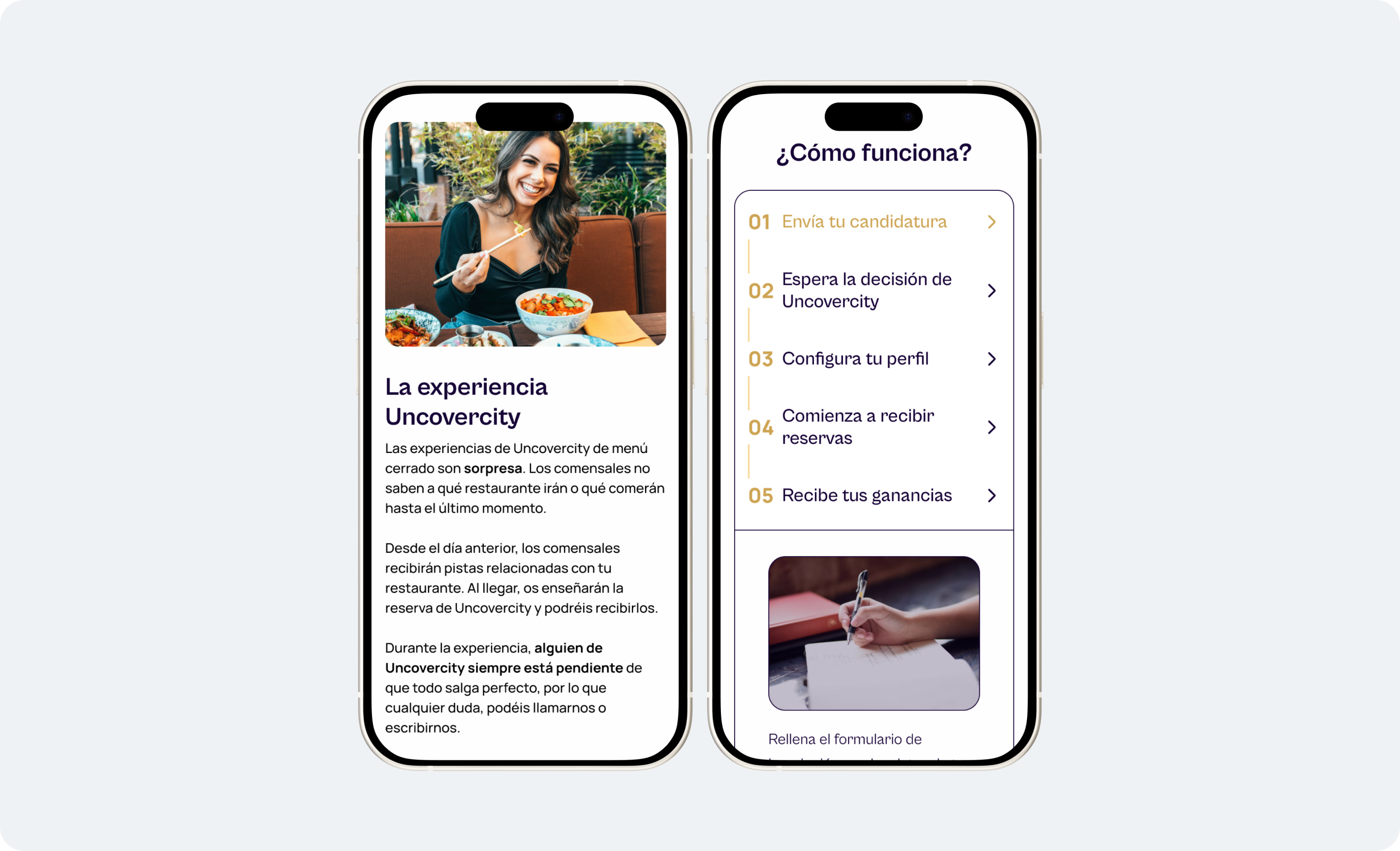
When I joined Uncovercity, the company was growing rapidly. Up until that point, there was no opportunity to create a Design System. Not many projects were designed first; instead, they were directly developed.
Product Designers across all teams agreed to create our very first Design System—not large, but sufficient to enable faster design iterations and maintain product consistency.
The data obtained about restaurants was mixed and unstructured, making decision-making difficult. We segmented the information and planned a system to obtain large datasets of restaurants from different Spain regions.
We started by setting up a dataset with all the cities of Spain, linking their postal codes. Then, we aimed to improve the restaurant search engine, so we decided to scrape data from neighborhoods in the largest cities to expand our restaurant database. This process was iterative until we achieved satisfactory results.
The operations team asked us to fill in more data from other sources on the Internet, so we designed a system that searched for restaurants in selected sources, such as famous food guides and other web references like TripAdvisor.
If you want to improve, you have to measure. We set up NPS to gauge how satisfied restaurant owners were with our product. Additionally, we implemented Microsoft Clarity and events in Google Tag Manager and Google Analytics to track user interest and behavior.
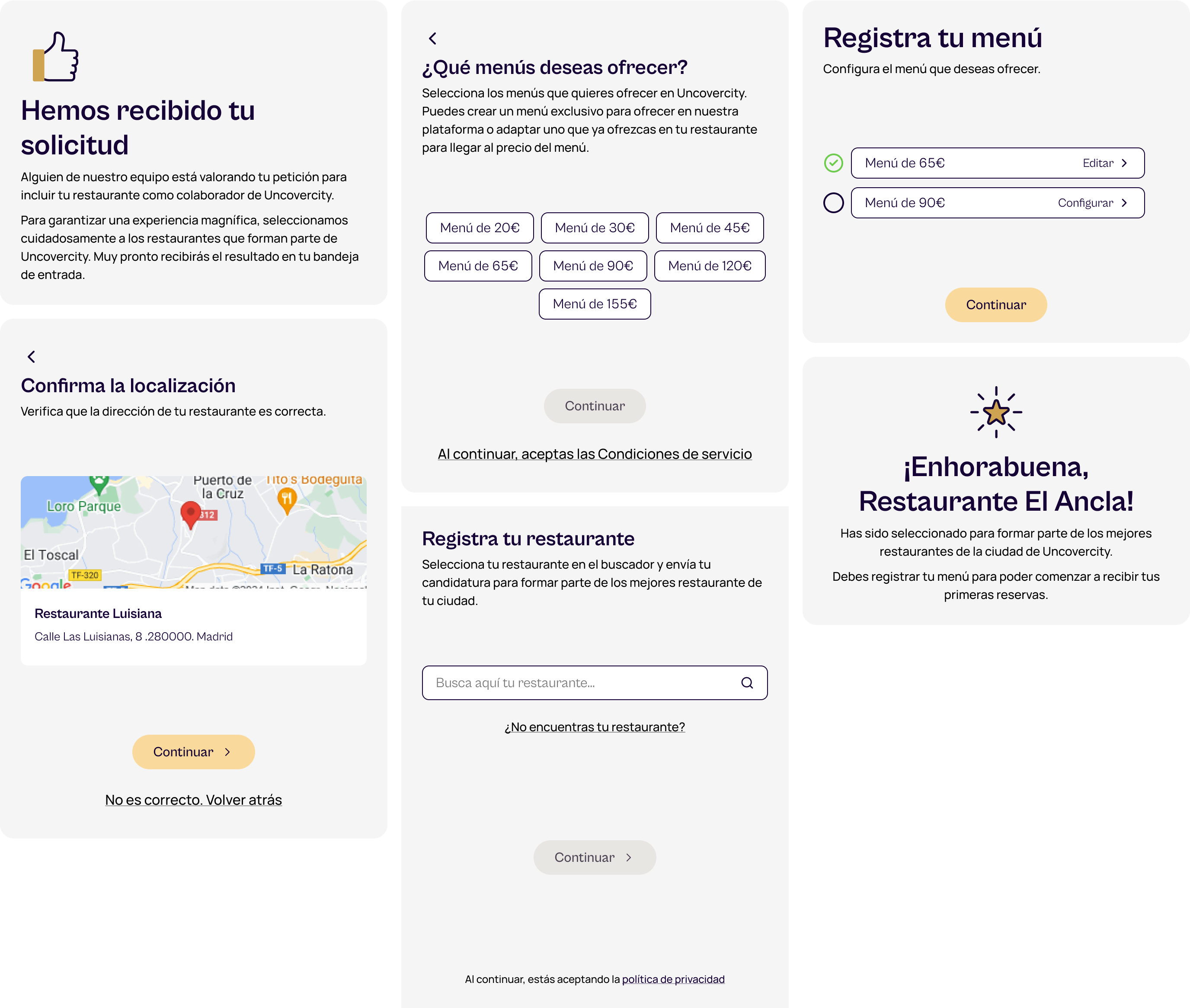
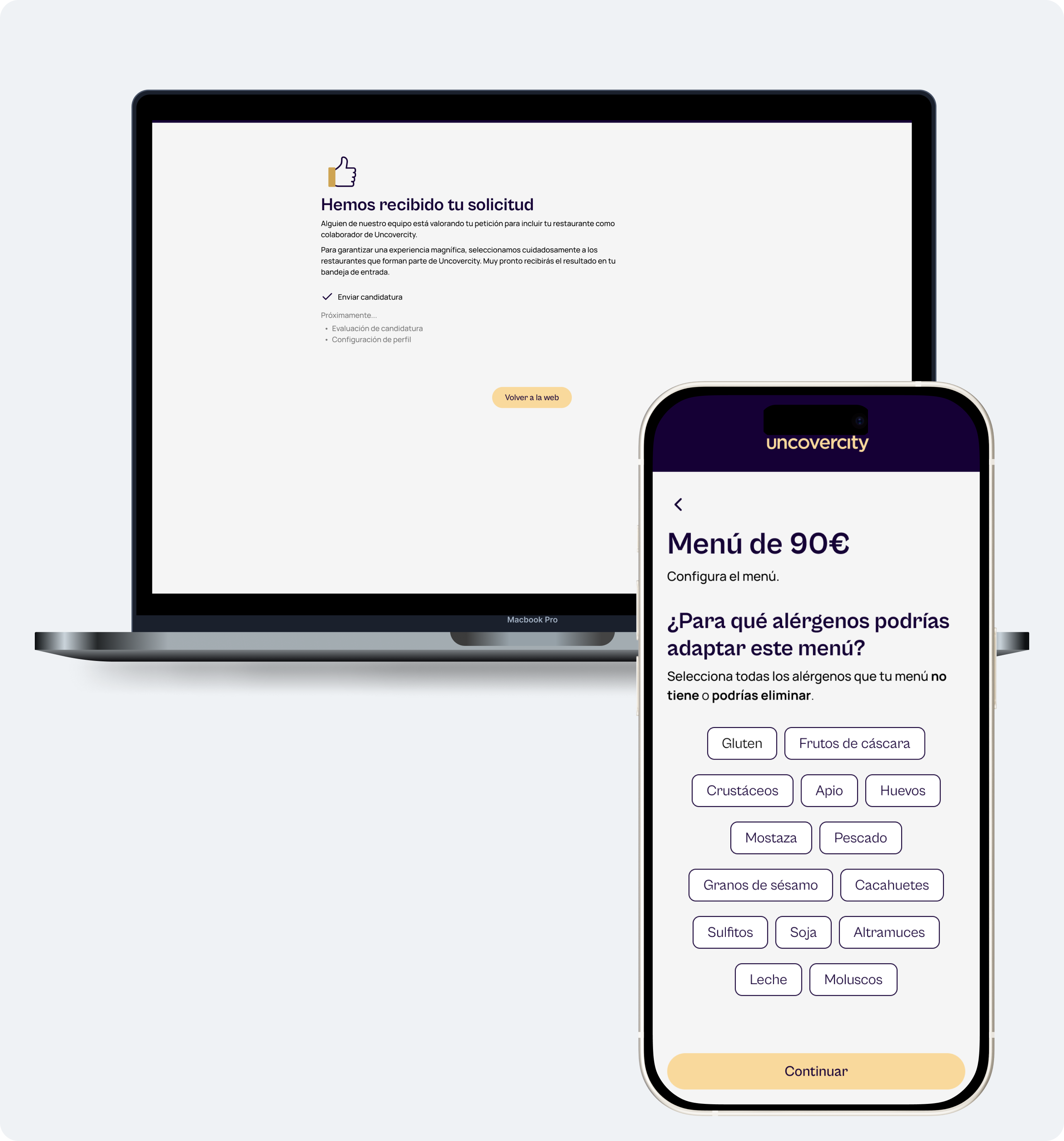
Once the user-oriented teams identified the necessary information to choose the perfect restaurant, we created a registration process for restaurant owners.
Lots of things neded some improvements, and also projects we already did needed them. However, time is short and we needed to go fast, so it was very important to prioritize in an agile and incremental mode to go faster.
Restaurants had never been approached in a massive way before. Until this point, Uncovercity members personally knew the restaurant owners they spoke to. They had a wealth of insights, but now was the time to test them. We used A/B testing on the web and through email, leveraging Lemlist, Clarity, and GA4.
As I also took on the role of PM, I had to prioritize what would most effectively achieve business goals, ensure that the team had the information they needed to perform the match, and make it easy for restaurants to register on the platform.
One key lesson was that staying aligned with direction and the team is essential for rapid progress. We used the ICE method for prioritizing. There’s always something you’d like to do first, but it’s not always what you must do right now.
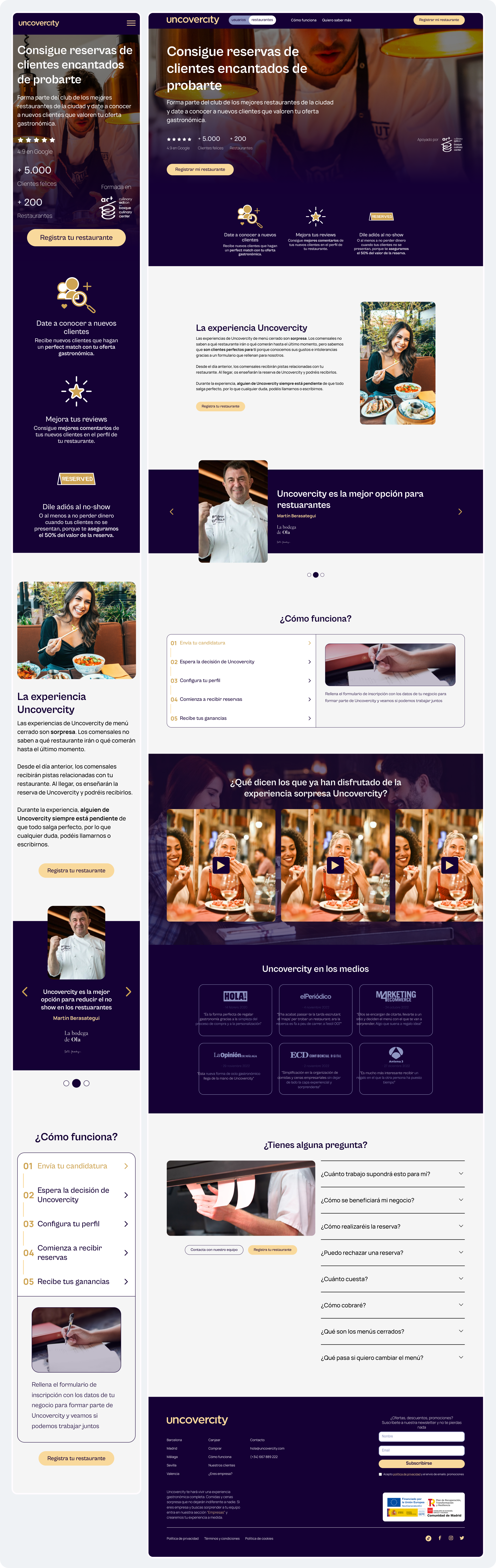
Once the design was complete, and to ensure speed, we implemented it using no-code tools such as Webflow, Typeform, Make, and Airtable. This allowed us to move faster and test effectively.
If there was no clear choice in design, we developed two options and tested them. We evaluated their performance and selected the one with the best results.
Our team worked with a lot of data, automations, and scenarios, so documentation was essential to ensure that the team understood what we were doing and to allow future members to work on our systems.
In the design phase, documentation was equally important. We had to communicate to the rest of the team how we thought through the process and documented iterations between low-fidelity and high-fidelity wireframes.
Several times, our developers were focused on backend tasks or data issues, leaving no time to develop the design. As a result, we took on the frontend implementation using Webflow or Bubble.
Working with limited time to create new solutions forces quick decisions and prioritization. We faced problems with quick fixes. I learned the importance of gathering user data, traffic data, and insights to make informed design decisions.
View prototypes